Blog
Glasgow’s 2026 Commonwealth Games and the Gendered Coverage of Scottish Sport
EMCC takes a look at the initial coverage of the 2026 Commonwealth Games and how women’s sport is covered in the media, reflecting on our research findings.
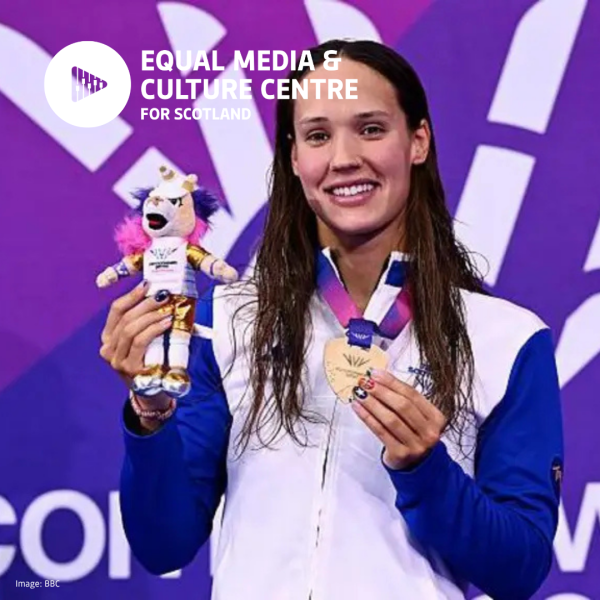 The Commonwealth Games have come to Glasgow, this time reduced to 10 sports. Glasgow picked up the baton to host the 2026 Games when Victoria, Australia dropped it, citing financial grounds. The result is a Games put together in a rush with a budget of £150m, and no public funds. To put this in perspective, Glasgow previously hosted the Commonwealth Games in 2014, with a budget of £543m(1). The pared down 2026 Commonwealth Games features just 10 sports, and for the first time since 1954, there is no free-to-air television coverage on the BBC. Instead, viewers can watch the Games on HBO Max with a £4.99 subscription (2). The reduction in number of sports, smaller stadium sizes and lack of budget mean that the 2026 Games has so far not picked up as much press as previous iterations.
Initial reporting on the Games showed that for some countries, participation by women is down on previous years. India was represented by an almost equal split of 106 men to 104 women at Birmingham 2022. This is now down to 77 men and just 48 women for 2026 (3). However, this year’s Games has the largest number of para-events, meaning that disability representation is at a record high with an expanded 47 events across six sports.
In 2023 EMCC undertook an analysis of a year’s worth of sports coverage and published the results in our report, The Gendered Coverage of Scottish Sport. Recognising that equitable and inclusive reporting can improve participation by highlighting role models for women and girls, the report showed that although there were some improvements in reporting on women’s football, other sports such as golf and rugby had further to go.
Between September 2022 and September 2023, we discovered that there was 28 times more coverage of men’s football than women’s football (4). Our report also found that coverage of women’s sport was often gendered, with golf coverage using the terms ‘strutting her stuff’ and ‘continues to blossom’ when referring to women golfers (5). We also looked at the usage of the gendered terms ‘ladies’ and ‘gentlemen’ in regards to both men’s and women’s sport. These terms have connotations around stereotypes and ability. We found that media coverage of women’s sport consistently used the term ‘ladies’ and found no instances of coverage that used the term ‘gentlemen’ to refer to men’s sport.
In spite of the media’s failure to support women’s sports on an equal basis, our research showed that audiences are increasing. UK women’s sports were watched by 37.6 million viewers in 2022, an increase from 32.9 million the previous year. The average viewer watched 8 hours 44 minutes of women’s sport in 2021 (6). The audience is there. The stage simply needs to get bigger to accommodate women’s sport.
Read our report, The Gendered Coverage of Scottish Sport.
 RSS
RSSGet in touch
Explore how you can contribute to our vision of a more gender-equal media and culture in Scotland by reaching out today.
Sign up to our mailing list
Sign up to receive updates on EMCC events, opportunities, and our latest reports, straight to your inbox: