Blog
GUEST POST: A Culture Act for Scotland by Kathryn Welch
 Culture Counts is Scotland’s network of arts, heritage, and creative industries organisations. They work to protect and develop the sector for the common good. In this blog Kathryn Welch, Director – Networks, Projects and Partnerships, walks us through the Culture Act and their experience of advocating with political parties for, and discusses their next steps.
What is the Culture Act proposal? What would a Culture Act do for Scotland’s cultural sector, and particularly, how could a Culture Act tackle systemic equality issues within the sector?
Over the past months, Culture Counts have been working with folk across the sector to ask political parties to commit to developing a Culture Act for Scotland over the next parliamentary term. After considering a whole host of potential ways that the political system might support the long-term sustainability of the culture sector, we felt that we needed to aim big – to campaign for strategic change that futureproofs and integrates culture into all areas of public life. The campaign for a Culture Act, for us, is a refusal to accept the status quo as the best the culture sector can aim for. We want to see a sector that grows and thrives, that is understood as a pivotal part of Scotland’s health, education, economy, international reputation and community cohesion, and that has a firm footing to build on for the long term. For the sector, we hope that A Culture Act would open doors to collaboration and partnership, would secure long-term investment on a sustainable scale, and would enable us to shift from bouncing from crisis to crisis toward a more ambitious, sustainable future.
From the start of the campaign, we outlined three principles that would define a successful Culture Act – that it be ambitious, consultative and inclusive. We intentionally positioned the tackling of inequality within the sector as absolutely at the heart of what a Culture Act could do – for us, A Culture Act can’t be successful if it doesn’t shift the dial on that. At the moment, so much of cultural opportunity is shaped by who and where you are, and by the shifting political sands on which we all stand. The purpose and possibility of A Culture Act is to explicitly recognise that opportunities to experience, participate in and create art are not experienced equally by all, and that without legislation to address that, we’re at risk not only of continuing those inequalities, but allowing disparities in access and opportunity to grow.
Running up to the 2026 Scottish Parliament elections, Culture Counts campaigned to have the Culture Act included in political party manifestos. What were the outcomes and what did you learn from this experience?
We were delighted to see that the Scottish Greens, Scottish National Party and Scottish Conservatives included commitments to cultural legislation in their respective manifestos. Together those parties hold 85 of the 129 seats in the new Parliament. The detail of each party’s proposal differs, but point to an underlying recognition shared across the political spectrum that a more substantive approach in this area is required.
The experience of campaigning for such an ambitious but relatively broad ask has been a real learning experience. We were really pleased to work in partnership with Community Leisure UK, whose remit to represent cultural leisure trusts gave us additional reach and connections with that part of the sector, and helped us to confidently navigate the really complex local authority landscape. We found brilliant allies and champions for the campaign right across the sector – my Co-Director Joseph and I held literally hundreds of phone calls and meetings to try to be as broad as possible in our reach, and to understand the opportunities and challenges of cultural legislation from a really wide range of perspectives.
Really pragmatically, I think we also learned about the limits of what’s within our control. There are so many moving parts that go into an election campaign, so many different (and sometimes competing) considerations, priorities and angles that shape what makes it into each party’s manifesto. That made it a nerve-wracking experience, at times, and required a bit of a leap of faith from our network and steering group. Our guiding principle, throughout, has been to act with a real sense of ambition for the sector – to ask for what would make a genuine difference for the sustainability of cultural provision over the long-term, rather than to try to squeeze our asks into what we think might be a more politically palatable proposal. In this case, I’m really delighted that the choice to lean into one ambitious ask came to fruition in the manifestos.
Now that the elections are over, what are the next steps in making sure the parties follow through on their commitments?
As part of this election we looked back at the parties’ commitments to culture made in the 2021 manifestos, and compared them to what we’ve seen play out over the five years since then. That highlights a huge gap between the manifestos that parties are elected on, and what’s realised in practice. Sometimes that’s a necessary shift as world events shape the context and priorities for decision-making, but equally it’s common for some election promises to lose momentum or get quietly abandoned.
Following this election, our immediate priority was to lobby the First Minister to make the case for culture to be secured at Cabinet Secretary level as the new Cabinet is formed. We outlined the risks of the remit for culture being demoted to a more junior Ministerial post, and made the case that a Cabinet Secretary-level post is essential in demonstrating culture’s relevance across the full breadth of government. We were really pleased, therefore, to see Màiri McAllan MSP appointed to a new post of Cabinet Secretary for Education, Culture and Gaelic.
This sort of advocacy sometimes feels a long way removed from the very immediate challenges facing artists and creative organisations. Over the longer term, though, it’s absolutely vital in making sure that culture gets the level of attention it deserves at a government level, and we can be part of the parliamentary processes (like a Culture Committee) that emerge from a Cab Sec-level appointment. The nature of Culture Counts’ advocacy means accepting that much of the work we do realises change slowly – often over a course of many years. It’s not the only way that change happens, but it’s part of the picture in positioning culture right at the very heart of the existing political system – and building spaces and processes that make the case for culture amongst some very powerful decision makers.
How can arts, heritage, creative and cultural organisations get involved in the next steps?
If you’re a representative body in the arts (for a geographic area, a particular artform or a particular group of people), join Culture Counts. We have free membership for perspectives otherwise underrepresented in our network. Anyone can follow our work – and stay up to date each month with three actions to take on cultural advocacy, via our Journal newsletter. For individuals - join a union. Sign up to be a member of your industry body. Write to your MSP. Connect us to the campaigns you’re running – we can’t always help directly, but we can help join the dots between the immediate crises in the arts and the strategic change that might help prevent them in future.
About: 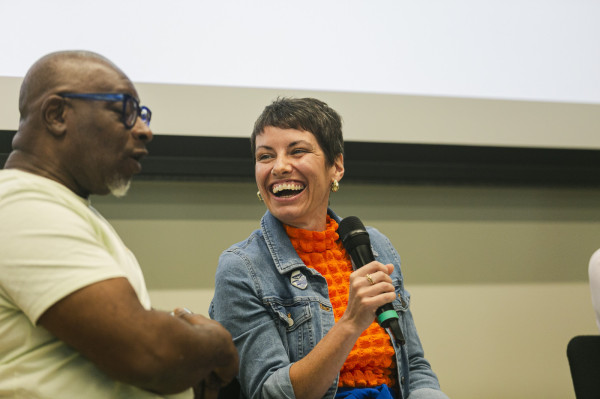
Kathryn Welch is Director of Network, Projects and Partnerships at Culture Counts. She specialises in community and participatory arts, and she is passionate about the connections between the arts and social change. She was Programme Lead for Creative Scotland’s flagship Culture Collective project, and held senior roles at Creative Lives and Macrobert Arts Centre. Kathryn’s freelance work explores network-building, knowledge-sharing and project coordination, working with local, regional and national arts organisations, think tanks, arts councils, grant-makers, local charities and research bodies.
 RSS
RSSGet in touch
Explore how you can contribute to our vision of a more gender-equal media and culture in Scotland by reaching out today.
Sign up to our mailing list
Sign up to receive updates on EMCC events, opportunities, and our latest reports, straight to your inbox: