Blog
GUEST POST: Adura Onashile on the lack of mid-career support for women
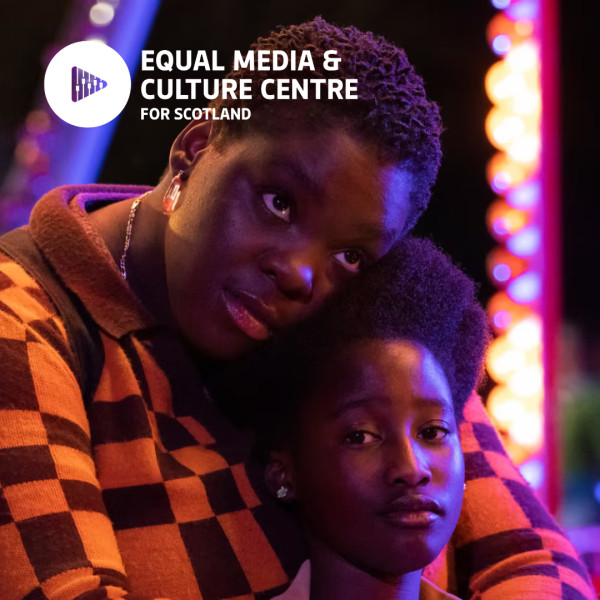 Adura Onashile is an actor, writer, director and mother. Here she writes about her experience trying to build a sustainable career in the arts. In the performing arts, early career professionals can benefit from talent development opportunities, however these do not translate to ongoing support and EMCC’s research shows that many women drop out of the sector due to a lack of mid-career progression and opportunity.
I have always worn many hats in the arts. Dancer, actor, workshop facilitator, writer, director. I told myself it was because I was multifaceted. And that is true. But I also need to be honest: I diversified because it was hard to make a living from a single artform. That is a reality few people talk about openly.
In 2020, opportunities came. I was part of Write4Film, a talent programme supporting writers from other genres to explore screenwriting. I went through iFeatures. I made a short film, then a feature. The circumstances weren’t always conducive to where I was as an artist, neither programme was particularly sensitive to the fact that I was a mother, but I believed the sacrifices I made would mean a better future for my daughter and me. I thought I was building something.
In January 2023, my feature film got into Sundance. That same year, I played the lead as Medea at the Edinburgh International Festival. In 2024 and 2025, I had to sign on for Universal Credit.
I want you to sit with that for a moment. Because it tells you everything about what mid-career looks like for a woman like me in this industry. After Sundance, I expected things to open. Maybe a handful of TV directing meetings. Maybe some screenplay commissions. Auditions, perhaps, at the right level. Instead, within six months, the meetings dried up and my focus became something much more basic: making enough money to live and look after my daughter. I started saying yes to things that weren’t right for where my creativity had taken me. Each compromise was small. The accumulation was not.
Recently, I applied for a shadowing placement scheme. One that is also open to emerging artists. I went to the interview and tried to bring my whole self, my years of experience, my body of work, everything I have built. And I left feeling small. Not because I performed badly. But because the role wasn’t built for someone like me. The room wasn’t asking the questions my career warranted. The opportunity was designed for someone at the beginning of their journey, and I had outgrown it before I walked through the door. The only reason I was there at all is because nothing else seems to exist for me.
What does mid-career actually mean? It means being able to direct an episode of television. A commission to write a mid-scale theatre production. Auditions for leading parts in theatre and supporting roles on screen. Earning £1,500 to £2,000 a month. Having the creative space to hold a vision for your future, because the industry has taken your experience into account. That is not ambitious – although there would be nothing wrong with that. That is just sustainable. So why is it almost entirely absent for me?
For women of colour, the barriers compound. I have to be honest: some of my early opportunities came explicitly because I am a Black woman. Those opportunities matter, I am not dismissing them. But none of them accounted for me being a mother. And as my experience and authority have grown, I have become increasingly aware that the gatekeepers have not changed. I walk into rooms that are almost entirely white, mostly male, and I feel myself adjusting. Not performing confidence, something more insidious than that. Dumbing down to fit whatever emerging category this room requires. Making myself legible to people who have not grown with me.
A few days ago, I was approached by a theatre company to submit an idea for a short film. I provided a synopsis. Their response was not a yes or a no, it was a request for me to spend a further unpaid day developing the idea before they would consider commissioning it. I have made a feature that went to Sundance. I told them: if I work on this further, I will treat it as the beginning of a full commission. I understood if they went elsewhere. I set a boundary. But I should not have had to.
My daughter is seven. She has seen my face on the side of a bus. She also knows that we struggle. I took a small part in a play earlier this year that meant six weeks away from home. I couldn’t save from it. I came home to an overdraft. She was proud of me. It broke my heart.
We need to stop acting like having children is a choice that does not affect how we work in the arts. We all know that women carry the burden of caring responsibilities. So why is childcare support not a standard line in every production budget? Why are there no mid-career commissioning funds? Why do emerging talent programmes not track where their alumni are five years on? These are not radical demands. They are basic infrastructure. And without them, the industry will keep losing women like me, not to failure, but to exhaustion.
I love the arts. I believe in the arts. My life feels worthwhile because of the possibility to be creative. It is what I do. It is who I am. And it is precisely because I love it this much that I am asking the industry to do better, not for me alone, but for every woman watching from the wings, wondering if there will be anything left for her when she arrives.
About Adura Onashile:
Adura Onashile is a Glasgow-based artist whose work spans film, theatre and audio, known for her deeply visual and emotionally rich storytelling. Her debut feature film, Girl (2023), premiered at the Sundance Film Festival, won the Fiction Award at the BlackStar Film Festival, and was nominated for BAFTA Awards for Best Director and Best Film. She was also named one of Screen Daily’s “Stars of Tomorrow.” Her short film Expensive Shit, adapted from her award-winning stage play, premiered at the BFI London Film Festival in 2020 and was shortlisted for a BAFTA in 2021.
First image: still from Girl, written and directed by Adura Onashile (2023)
 RSS
RSSGet in touch
Explore how you can contribute to our vision of a more gender-equal media and culture in Scotland by reaching out today.
Sign up to our mailing list
Sign up to receive updates on EMCC events, opportunities, and our latest reports, straight to your inbox: