Blog
Guest post: Scottish Documentary Institute’s 50/50+ Women Direct Campaign
We are delighted to hear from the Scottish Documentary Institute’s Debora Bottino on the findings from their recent 50/50+ Women Direct campaign survey. Identifying key barriers to gender parity in the sector, SDI created the campaign to tackle this imbalance, with a goal of 50% of Scotland’s documentaries being made by women by 2025. Now they reflect on the campaign and ask what’s next for women in documentary?
What is the 50/50 Women Direct campaign?
At Scottish Documentary Institute, we believe documentary is at its best when it reflects the full range of lived experience, when the stories told on screen are shaped by the same diversity we see in life.
 In 2019, we launched the 50|50+ Women Direct campaign to advocate for a more inclusive and representative documentary community, after having identified a number of key barriers to gender parity in the sector. Our research had revealed a striking imbalance: between 2015 and 2018, only 16% of Scotland’s creative feature documentaries were directed by women.
Since then, the campaign has built momentum and visibility across the sector. By 2021, 30% of Scotland’s documentaries in production were directed by women, and by 2024 that figure had grown to 48%.
To guide the next phase of this work, we invited women and marginalised genders working in documentary in Scotland to share their experiences. This survey was carried out in 2024 and brought together reflections from documentary filmmakers across Scotland, from emerging voices to established figures. The majority were directors (45%), but we also heard from editors, cinematographers, and producers.
Most responders (90%) identified as women (including trans women), with several identifying as non-binary or gender diverse. The survey also revealed a broad range of lived experience impacting artistic practice, with 70% of respondents noting factors such as caring responsibilities, mental health issues, working-class background, and sexual identity. Nuances around gender also emerged, including experiences of perceived “talent debt” on new shoots.
While several respondents observed that documentary in Scotland has had pockets of progress - including a growing network of supportive peers, and an openness around gender equity - structural barriers remain stubbornly familiar.
Barriers and challenges
Across the responses, there’s a shared love for the craft of documentary: the deep relationships, creative risks, and chance to represent real lives with care and integrity.
At the same time, many respondents described a landscape that feels ‘increasingly precarious’. Funding remains tight, the path to feature production unpredictable, and sustainable work often depends on taking multiple roles or supplementing filmmaking with other jobs.
One participant shared, “It’s a constant balancing act between art and survival, between caring for others and trying to find space to care for the work.”
Funding and economic insecurity
The most pervasive challenge identified across responses is financial insecurity and lack of adequate funding. This emerged as the primary barrier affecting career progression, with respondents consistently rating financial challenges as a 5 (the highest severity) in the barriers section.
One emerging director articulated the impossible choice many face: ”Having to choose between personal progress (in terms of building a family, securing a mortgage etc) and professional development within filmmaking since the lack of funding for directors are never enough to live sustainably - even after securing a commission, paying myself proves to be impossible in most cases.” They continued: ”I recognise it’s a result of deep-rooted imposter syndrome which leads me to believe I’m not established enough to deserve a cut of the budget.”
Caring responsibilities and burnout
Caring responsibilities remain a critical barrier. 80% of respondents scored these as highly impactful (4 or 5), highlighting how parenting, elder care, and health management (still disproportionately shouldered by women) can quietly restrict access to networking, travel, and unpredictable, long working hours that filmmaking often demands.
One filmmaker described themselves as “Working full-time in Scottish Screen sector, full time parent plus part time caring for elderly parents plus trying to finish commissioned film with a general lack of genuine understanding or support from the industry, from men and women.”
The intersection of care and creativity challenges the film industry’s inherited structures of productivity. In a system built around availability and constant mobility, those who anchor their lives around care work become structurally disadvantaged. Reimagining an inclusive industry means redefining success, not as relentless output, but as sustainable participation that values human interdependence as much as artistic independence.
Bias, confidence, and gatekeeping
Several respondents spoke about facing bias.These include assumptions about capability, leadership, or risk-taking. They all identified deeply embedded structural barriers that perpetuate gender inequality in the industry. Multiple filmmakers rated “lack of trust” in women’s abilities (particularly regarding higher budgets or risk-taking) and “men hire men” dynamics as significant barriers . Others mentioned the scarcity of female producers or executives in key decision-making roles, and how that perpetuates unequal access to resources and trust.
“In the majority of shoots that I do as a director or camerawoman, particularly in commercial work but this also happens in documentary work, I start the day in perceived talent ‘debt’ and have to work to prove that I am capable of being there, even on projects I am over qualified for... It can be draining and frustrating.” Key barriers in this category scored highly (4 or 5) on our scale:
Men hire men – 60%
Lack of role models – 65%
Lack of trust – 65%
Internalised discrimination – 60% (noting 20% did not relate at all)
Emotional labour keeping them out of directing – 85%
Career continuity/fair pay – 80%
Ageism also emerged as a significant barrier, particularly beyond 50 years, Several respondents also identified ageism as a significant and often insurmountable barrier. One established producer wrote: ”I have not been successful give or take in any recruitment process since I turned 50. I got every job I applied for until I was 50.”
Accessibility and mental health
Filmmakers living with physical or mental health conditions described the industry as largely inaccessible. Irregular hours, unclear support structures, and stigma around capacity all take a toll. Mental health barriers were consistently rated highly by respondents who experience them.
What filmmakers want next
Responses to whether the sector has improved over the past four years were mixed.
 Some respondents saw meaningful change. One director observed: ”I have direct experience from 2007 when females were really treated 3rd class, so things have vastly improved in my opinion.”
Another observed: ”I think more people are actively hiring women but I don’t think they’re doing it at Heads of Department levels and it’s more general crew. They’re still hiring the same faces that they did before for these senior roles, who are typically men.”
Despite the challenges, many filmmakers recognised real movement in the past few years. Participants noticed that conversations about gender equality have become more open and accepted. Several filmmakers praised the 50|50+ Women Direct(ory) as a valuable tool for visibility and connection. While structural change is slow, the collective effort to keep gender equity on the agenda has made a difference.
Looking forward, respondents shared thoughtful, hopeful ideas for how the campaign and the wider sector could better support them. Some suggestions speak of a desire for collective care structures that address gaps in traditional support systems.
“I have been thinking for a while about some sort of community funding model that could work for the female documentary community whereby people pay a membership fee and can access maternity pay or even one-off help if / when they need it.”
Other key suggestions included:
-
More active mentorship and peer-to-peer support, especially for those balancing caregiving, disability, or rural isolation.
-
Funding reform, flexible, sustainable models that allow filmmakers to pay themselves fairly and build continuity between projects. Community-led initiatives, such as small emergency or care funds for freelancers.
-
Ongoing visibility and accountability, ensuring 50|50+ remains more than a slogan.
-
Addressing the “second feature” gap, where many directors face years between projects due to funding and access challenges.
SDI reflections and next steps
Reading these responses, we are reminded why the 50|50+ Women Direct campaign began: to make space for voices historically sidelined, and to strengthen a community that already exists, even if it’s stretched thin.
In reflecting on these findings SDI acknowledges that equity cannot be achieved through representation alone. It requires reimagining the very architecture of opportunity (funding systems, commissioning cultures, definitions of professionalism and success) that currently privilege a narrow model of creative labour. Structural change, in this sense, is not about adding more seats at the table but rebuilding the table itself.
The findings also underscore a deeper truth about representation in nonfiction storytelling. Documentary, as a public art form, depends on who gets to hold the camera, ask the questions, and frame reality. The structural inequities described in this report are not only professional barriers, they are cultural losses.
The 50|50+ Women Direct campaign has already demonstrated tangible impact through the Women Direct(ory), networking initiatives and funding opportunities. Yet, this survey makes clear that progress must now move beyond representation toward redistribution of resources, of recognition, and of opportunity. Financial insecurity, caring responsibilities, ageism, mental health challenges, geographic isolation, and persistent gender bias form intersecting pressures that no single intervention can resolve in isolation.
Our ongoing commitment must therefore include:
-
Continued advocacy and public accountability
-
Expansion of peer and community support
-
Exploration of mutual aid and solidarity-based funding models
-
Regular measurement of outcomes to ensure real, lasting change
The 50|50+ Women Direct campaign will continue to evolve, guided by this principle: that visibility, solidarity, and sustainability must go hand in hand. Documentary, at its best, is a collective act of seeing.
About SDI
Scottish Documentary Institute (SDI) was established in 2004 to support the development of documentary filmmakers and engage diverse audiences. Our team is dedicated to championing the unique and vital role of independent documentary within both the film industry and wider society. We believe in the power of documentary to spark critical thinking and to inspire positive social change, in a generous and thought-provoking way. Through training, funding, inspirational events and distribution, we deliver a slate of development opportunities to benefit all Scotland-based directors and producers, and support them on a national and international level. We also actively collaborate with documentary organisations around the world to champion and celebrate the art form.
Website: scottishdocinstitute.com
Social media: @scottishdocinstitute
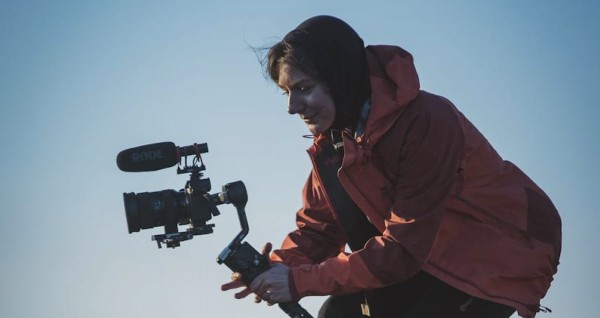
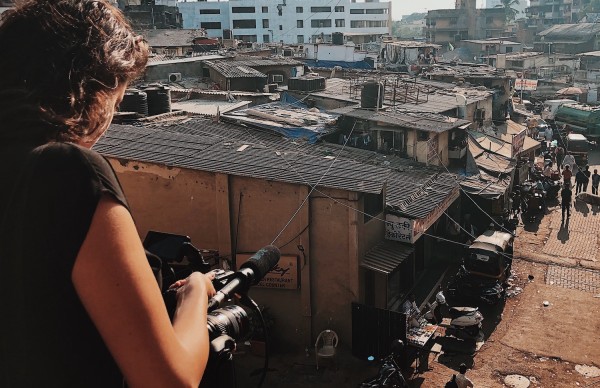
Image credits, top to bottom: The Sound of the Wind - Maria Pankova, Roll Down the Window - Lipa Hussain, Lea Luiz de Oliveira
 RSS
RSSGet in touch
Explore how you can contribute to our vision of a more gender-equal media and culture in Scotland by reaching out today.
Sign up to our mailing list
Sign up to receive updates on EMCC events, opportunities, and our latest reports, straight to your inbox: