Blog
GUEST POST: IWD 2026 – Alycia Pirmohamed on the underfunded, unequal literary landscape
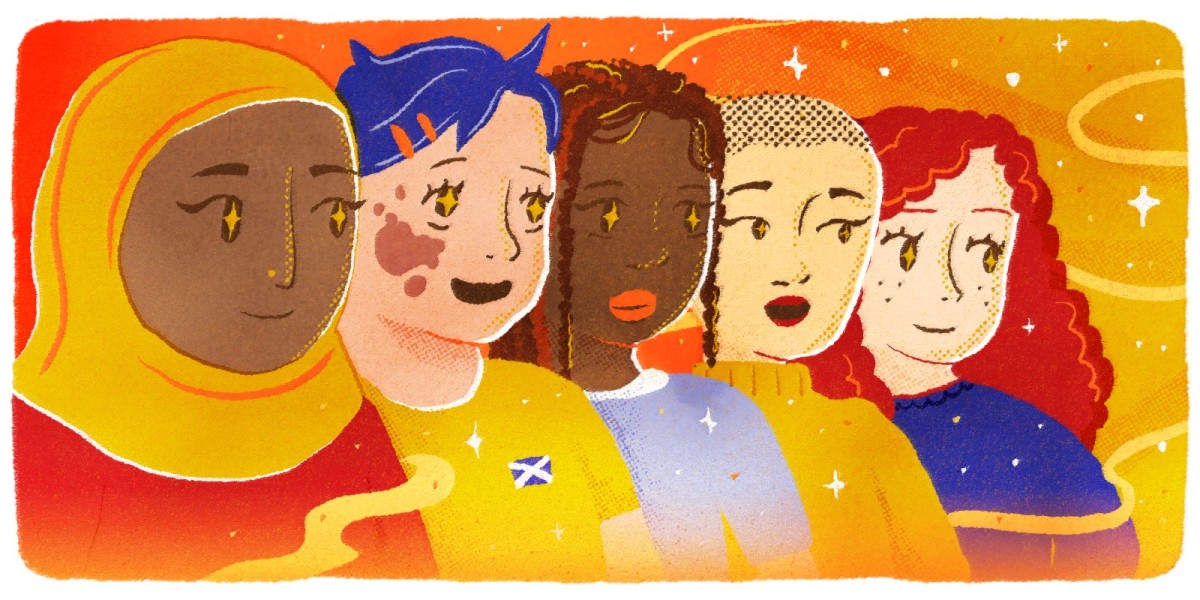
Illustration by Kumi McKenna
International Women’s Day 2026 falls in the lead up to the Scottish Parliament elections. With this in mind, we have asked women working in the arts and culture sectors to reflect on our 2026 Manifesto: Transforming Culture for a Fairer Future. In her blog poet, writer and co-founder of Scottish BPOC Writers Network Alycia Pirmohamed reflects on funding, the resulting labour around it, and the experience of marginalised communities facing systemic barriers in the sector.
Last September, I sat in an immigration office in Edinburgh where I was going through the motions of applying for permanent residency. This was just two days after anti-immigration protests attended by over 100,000 people swept the nation.
This is what I held/hold in my body:
Tension. Anyone who is racialised in a predominantly white state, and who comes from a history of migration, knows this tension intimately. It keeps our bodies rigid. Alert.
Fear. I was asked questions about my intentions to settle followed by a pat down, biometrics and fingerprinting, and a photograph. It felt like any imperfection or wrong answer could strip me of my status and, therefore, my chosen home.
Grief. I thought of my parents going through the immigration process in the ‘70s, when they migrated from East Africa to Canada. I imagined them going through the same invasive procedures. I was a living repetition of being assessed, perceived, scored, welcomed, unwelcomed, protested against and surveilled across generations.
Afterward, I left the office, went back to my flat, sat at my desk, opened my notebook, and attempted to continue the business of writing and teaching poetry.
*
Creating art amidst feelings of tension, fear, and grief is my reality as a woman of colour in the UK. I’m someone who transgresses what Audre Lorde calls the ‘mythical norm’ by existing outside of dominant narratives of gender, race, religion, sexuality, and class. Lorde writes that ‘it is within this mythical norm that the trappings of power reside.’ (1)
I’ve worked in writing and publishing in Scotland for almost nine years and have witnessed the very real systemic barriers faced by gender-marginalised people at intersections of oppression. As a creative, I’ve interacted with arts organisations, publishers and institutions, like universities, where material power at the helm is held primarily by who are most closely aligned to the ‘mythical norm.’
The way power is distributed at the top funnels down to who gets opportunities, resources, visibility and readership in the literary industry. In 2025, The Quine Report found that ‘in over 100 years of Scottish literary prizes, men were awarded almost twice as often as women’ and further, that only 4.6% of the winners over that time period across all genders were Black people and/or people of colour. (2)
This is the literary climate wherein Jay Gao and I co-founded the Scottish BPOC Writers Network (SBWN) in 2018, an intersectional organisation for writers of colour that is now co-directed by Jeda Pearl and Titilayo Farukuoye. This organisation exists to combat the systemic barriers we face as writers of colour and for us to find community with one another. We have since partnered or collaborated with other such organisations like Fringe of Colour, We Are Here Scotland, U Belong Glasgow, Creatives of Colour, and more. Though we are funded by Creative Scotland now, we started as a grassroots organisation that relied heavily on volunteer hours to get off the ground.
Funding is what has made our organisation sustainable, allowing us to pay our team, a committee of mostly women and nonbinary artists. But for the seven years before we became a MYF organisation (3), we spent much of our time labouring over funding apps, sitting in precarious financial positions, wondering if this would be the year our application would be rejected – and also worrying for our fellow creatives, our friends who worked with other radical, community-oriented organisations that were competing for this limited amount of funding too.
Meanwhile, amidst the pragmatic question of funding and the logistical hurdles of difficult and long applications, our communities were also huddling together over WhatsApp and on the phone. We were holding volunteer-run solidarity spaces for people feeling the effects of witnessing multiple genocides, for people buckling under the emotional weight of Islamophobic rhetoric and anti-Blackness in their everyday spaces, for people mourning loved ones as the climate crisis disproportionately affected the Global Majority, for people reading about and experiencing the effects of race riots in the UK – the list goes on.
Oh, and we were also trying to write poetry.
*
According to the Equal Media & Culture Centre’s manifesto, Transforming Culture for a Fairer Future, ‘local government revenue funding of culture and related services has fallen by 29%, and arts council core government funding has fallen by 22%’ (4). Artists, community organisers, and indie publishers are feeling this strain in very real and devastating ways, and it’s a trend seen in the funding landscape of the wider UK.
Even as I was writing this blog post, I came across the news of how Verve Poetry – a stalwart champion of underrepresented writers, and the publisher of many of SBWN members’ first pamphlets – was postponing their festival because for the first time in nine years, they failed to secure Arts Council funding. And just last month, as an author published in one of their anthologies, I received an email from the director of Scottish indie publisher, Haunt Publishing. They were sadly announcing the closure of their press.
News like this follows a recent open letter penned by over twenty independent and small presses on the state of funding. This letter sheds light on the difficulties of sustaining the necessary and risk-taking work these presses do. The letter states: ‘Many small presses are running on the ‘potential’ of funding, which is an unsustainable operational model. Without investors or guaranteed grant funding, there is no sustainable future.’ (5)
The presses that signed this letter are those that work hard to demystify publishing and pave a way forward for writers who face systemic barriers. The letter emphasises that their authors are those who ‘enhance UK publishing’s bibliodiversity by supporting writers of colour, queer and trans, working-class and intersectional authors, alongside translations from languages less-represented in Anglophone markets.’
I know many of the people who work on these presses. They write open letters, they advocate for a better, more representative literary ecosystem, they speak out against funding cuts, they champion underrepresented work – and they are also often artists themselves.
We create, we write poetry, in an underfunded and unequal literary landscape. Here, the precarity, the tension/fear/grief, is ever creeping. Without real, material, and resource-supported change, more and more necessary spaces will fold.
More and more voices will be erased.
About Alycia Pirmohamed
Alycia Pirmohamed is a Canadian-born poet based in Scotland. In 2022, her award-winning debut poetry collection, Another Way to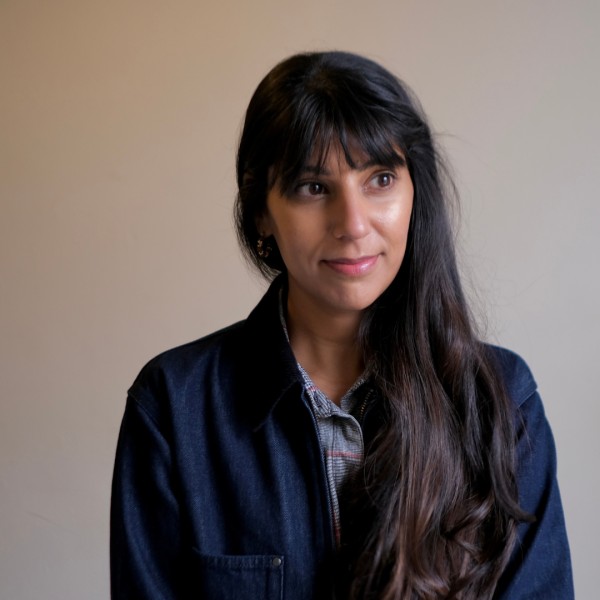 Split Water, was published with YesYes Books and Polygon Books. In 2023, Alycia won the Nan Shepherd Prize
for her debut nonfiction book Shorelines: Memory, Migration and the Selves We Become, forthcoming with Canongate in 2026. Alycia is co-founder of the Scottish BPOC Writers Network. She is the winner of the 2020 Edwin Morgan Poetry Award, and the recent recipient of a Pushcart Prize. Along with poetry, Alycia writes poetry criticism, reviews, and lyric essays.
https://www.alycia-pirmohamed.com/
https://www.instagram.com/alyciap_/
https://elsewheres.substack.com
References
1 ‘In America, this norm is usually defined as white, thin, male, young, heterosexual, Christian, and financially secure’ (from Sister Outsider). I also include able-bodied in this definition.
2 The Quine Report by Dr Christina Neuwirth: https://quinereport.com/
3 ‘Multi Year Funding,’ Creative Scotland’s funding strand that offers support to organisations for three years at a time
4 https://emcc.engender.org.uk/manifesto-2026/
5 https://www.thebookseller.com/comment/open-letter-on-the-future-of-small-press-publishing-in-the-uk
 RSS
RSSGet in touch
Explore how you can contribute to our vision of a more gender-equal media and culture in Scotland by reaching out today.
Sign up to our mailing list
Sign up to receive updates on EMCC events, opportunities, and our latest reports, straight to your inbox: