Blog
International Women’s Day and our manifesto for a fairer future
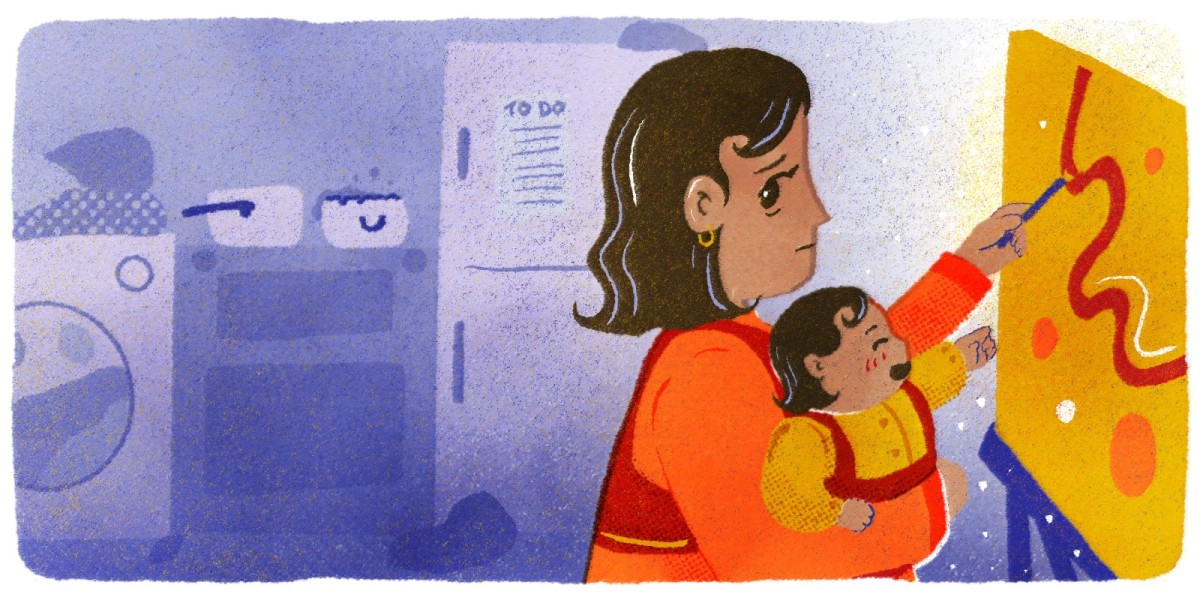
Illustration by Kumi McKenna
International Women’s Day 2026 falls in the lead up to the Scottish Parliament elections. With this in mind, we are reflecting on our 2026 Manifesto: Transforming Culture for a Fairer Future. In this final blog, EMCC Project Manager Katie Goh reflects on women’s experiences across the arts, culture and creative sectors and what steps need to happen to improve equity for women and marginalised communities.
Last September, at our inaugural conference, we launched our manifesto Transforming Culture for a Fairer Future ahead of the 2026 Holyrood election. The manifesto was sent to all MSPs and major political parties, so that they can keep women’s equality and the culture sector top of mind when developing their party manifestos and cultural policies.
As we developed our manifesto last summer, we spoke with women in Scotland’s culture and media sectors, as well as organisations advocating for equality in the cultural sector, about the barriers that persist for women, especially women from marginalised backgrounds. We heard about unequal pay and poor working conditions; lack of funding and inaccessible funding applications; sexism and racism in the workplace and the invisible, unpaid labour that women do for the sector.
These incidents impact individuals on a day-to-day basis, but they are also structural, deep-rooted problems that require systemic and transformative change. In our manifesto, we refer to the statistics and sources that demonstrate just how unequal the culture sector still is for women. In our guest blogs for International Women’s Day, we hear about the experiences of women working in the sector right now, and the barriers they face.
Women’s contribution to the creative industries is systematically, financially and culturally undervalued. For meaningful long-term change to happen, we need political parties and cultural leaders at the highest national level to commit to changing policies and practices, so that all women can achieve their full potential. In our manifesto, we outline three asks which would get us closer to gender equality in the culture sector.
1. Commit to a baseline target for national arts funding that is above 1% of the overall Scottish Government budget.
We know that when public funding is limited, the arts is at risk of becoming the preserve for the privileged few who can afford to self-fund projects. This is already occurring, with the UK’s creative industries employing four times as many people from middle-class backgrounds compared to those who grew up working-class.
The Culture, Tourism, Europe and External Affairs Committee of the Scottish Parliament has recommended that the Scottish Government’s baseline target for national arts funding should be above 1% of the overall budget, bringing it in line with the European average of 1.5%.
In order to effectively tackle inaccessibility and inequality in the culture sector, we ask political parties to commit to meeting that baseline target, to bring Scotland’s national arts funding closer to the European average. To ensure that women in the creative industries are not being inadvertently discriminated against and to assess the impact of Scottish Government funding designs, we also ask political parties to commit to completing an intersectional gendered analysis of the arts budget.
2. Increase efforts to close the gender pay gap in Scotland’s culture and media sectors.
In Scotland’s creative industries, 34% of workers say there is an issue of unequal pay in their workplaces, and the gender pay gap still has not closed across Scotland’s labour market more broadly.
Occupational segregation continues to be an obvious problem in the culture sector. Women make up the majority of lower-paid and part-time roles, whilst men are more likely to be employed in leadership and decision-making positions, earning higher wages. Self-employed women are even more vulnerable to low pay and unfair work practices, including lack of access to employee benefits like sickness or maternity pay.
A gendered analysis of Scottish Government’s arts and culture funding decisions could be done to assess where women may be impacted by pay inequality; for example, if, when funding cuts are made, women in the arts sector are impacted at a disproportional rate to men. Scotland’s creative public funding bodies, such as Creative Scotland and Screen Scotland, should also undertake an intersectional gendered analysis of their existing practices to ensure that women do not face unnecessary or discriminatory barriers when applying for funds.
3. Develop and implement a national strategy that addresses inequality, including gender discrimination, in Scotland’s culture and media sectors.
In Scotland, our data on gender inequality in the creative sectors is severely limited. The Scottish Government must act to ensure that women’s experiences in the culture and media sectors are adequately and ethically recorded, so that evidence-driven policy change and analysis can happen.
The next Scottish Government must commit to a strategy to end gender disparity and discrimination in Scotland’s creative industries, including an intersectional gender analysis of budgets, funding decisions, fair work and EDI practices. The next government should also set out a realistic timeline for implementation of the strategy to ensure that the current and future generations of women can thrive in their creative work without barriers.
Support our manifesto:
Our asks have been developed with our vision – of a Scottish society where women’s contribution to culture and media is fully realised and recognised, free from gender discrimination – in mind. However, we know that for women who face intersecting discrimination in Scotland – Black and minority ethnic women, disabled women, LGBT+ women, carers, refugees and migrant women, and older and younger women – these women face specific and intersectional barriers and discrimination in the culture sector. The sector must do more to ensure that we are lifting all barriers for all women.
Women’s equality and inclusion in culture is not a marginal issue, but rather, has a major rippling impact on anyone who works in or engages with culture. As well as political parties, we need the culture sector to acknowledge that the sector is not as safe, equal or fair for women as it should be.
We are proud to have sector-wide support for our manifesto asks; from Glasgow Women’s Library, Pass the Mic, We Are Here Scotland, Migrant Women Press, Stellar Quines, Culture Counts, Film Hub Scotland and more. We are continuing to garner support from both organisations and individuals in the culture sector, so please get in touch with us if you would like to lend your support to our manifesto asks.
Email katie.goh@engender.org.uk to support the EMCC manifesto.
Read our manifesto.
 RSS
RSSGet in touch
Explore how you can contribute to our vision of a more gender-equal media and culture in Scotland by reaching out today.
Sign up to our mailing list
Sign up to receive updates on EMCC events, opportunities, and our latest reports, straight to your inbox: